Current with Claire: To the Moon and Back

By Claire Brothers
Political Scientist and Analyst
CU Boulder Political Science Class of 2023
On the evening of April 1, 2026, the Artemis II spacecraft took off from launch pad 39B at the Kennedy Space Center in Florida. This launch marked the beginning of a new era in space exploration and a return to the Moon 50 years after the Apollo missions in the 1970s. Manned by NASA astronauts Christina Koch, Victor Glover, Jeremy Hanson, and Reid Wiseman, the Artemis II broke records and reignited the public’s love of space exploration. Millions watched around the country and the world as they completed the 10-day lunar fly-by, splashing down back home on Earth on April 11, 2026, at 5:07 PDT.
The journey was completed in the Orion spacecraft, the small part of the rocket that makes it through takeoff and entry into space. The flight path took the astronauts 248,555 miles from Earth, farther than any human has ever been. This beat the record previously set by the Apollo 13 mission in 1970. Just before reaching the record-setting distance, astronaut Jeremey Hansen said, “From the cabin of Integrity here, as we surpass the furthest distance humans have ever traveled from planet Earth, we do so in honoring the extraordinary efforts and feats of our predecessors in human space exploration. We will continue our journey even further into space before Mother Earth succeeds in pulling us back to everything that we hold dear. But we most importantly choose this moment to challenge this generation and the next to make sure this record is not long-lived.”
Not only did the crew travel the furthest distance from Earth in human history, but they also saw some parts of the moon for the first time with human eyes. At its closest, the spacecraft was 4,067 miles from the surface of the moon. Astronaut Christina Koch also set the record for the longest spaceflight by a woman. This mission, as well as the upcoming Artemis missions, continues to explore and map the Moon to contribute to the long-term goal of a “Moon Base.” This base will be located at the Moon’s South Pole and will support long-term exploration, as well as serve as a “proving ground” for future missions to Mars. The success of the Artemis II mission was crucial to advancing this goal and the future of NASA space exploration.
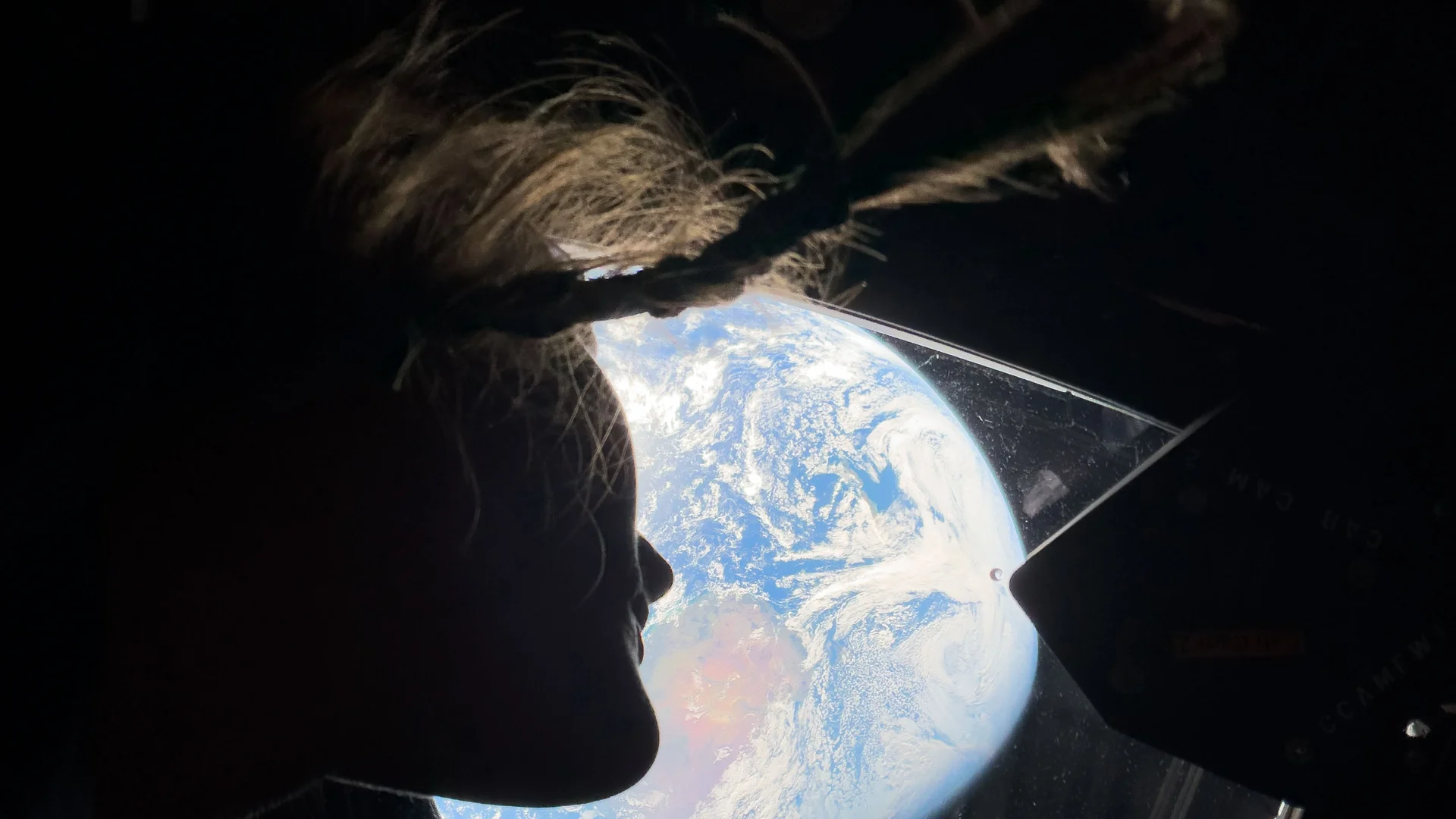
The next Artemis mission, Artemis III, is scheduled for mid-2027 and will be a “Low-Earth Orbit.” The primary purpose of this mission will be to test the spacecraft's docking capabilities with commercial landers. The following missions, Artemis IV and Artemis V will both land on the moon, the first lunar surface return since Apollo 17. Millions of us watched from back home on Earth as the crew of the Artemis II journeyed through space for 10 days, setting new records and furthering humanity's exploration into the great unknown. Upon their safe return, people everywhere celebrated the journey and welcomed the astronauts back home. As new generations grow up watching the Artemis missions and previous generations remember the Apollo missions, the human desire to explore space and the great unknown continues to flourish and will do so for decades to come.
Sources
https://www.esa.int/Science_Exploration/Human_and_Robotic_Exploration/Artemis_II_splashd own#:~:text=Today%2C%20at%2017:07%20local,since%20Apollo%2017%20in%201972.
https://www.nasa.gov/news-release/nasas-artemis-ii-crew-eclipses-record-for-farthest-human-spa ceflight/
https://www.nasa.gov/mission/artemis-ii/
https://www.nasa.gov/wp-content/uploads/2026/03/building-the-moon-base-1.pdf?emrc=69e8f149004e2